
The Who-is-who in greek mythology: Greek mythology in a nutshell
Greek mythology – just saying these very words conjures up images of gods, monsters, and epic quests that have shaped the very fabric of storytelling in our world. And if you take a close look at these myths, you will find that they are much more than just ancient stories; they are a reflection of the most primal parts of our human nature. Power, love, betrayal, war, and the constant struggle for survival – these are the topics that the Greek gods and heroes were not immune to. Every character in these myths is larger-than-life – but also deeply human. So let’s have a look at these essential figures of Greek mythology, each with their own dramatic narrative.
The who-is-who in greek mythology:
The Olympian gods – Masters of Mount Olympus
The gods of Olympus weren’t just divine figures of worship – much more they were the forces behind everything that happened in the cosmos. These gods were the rulers, the creators, the destroyers of everything around them. They didn’t just govern; they controlled the fate of gods and men alike, so it is no wonder, that their tales are full to the brim with drama, passion, and wild unpredictability.
Zeus – The king who wields the thunderbo
Zeus – he didn’t just sit on a humble throne, no, he ruled the heavens. He is the sky god, the thunderbolt wielder. Zeus word was the law and absolute. But beneath his regal exterior, Zeus had a notorious reputation for extra-marital affairs – lots of them. Imagine a king whose reign is punctuated by constant chaos in his personal life. His power was undeniable, but his actions made him as complex as the storms he controlled but also gave him a very human aspect. Power? Yes. Responsibility? Sometimes. Consequences? Usually avoided, or at least, delayed.

Hera – The queen with a sharp tongue
Hera, the wife of Zeus, didn’t have it easy. Queen of the gods, yes, but her position came with constant drama. Her husband’s endless affairs left her enraged. Hera was not a goddess of forgiveness, far from it! She took revenge in brutal ways, leashing out at the victims of Zeus’s affairs. Her jealousy was legendary, yet beneath the anger was an undeniable devotion to her role as the goddess of marriage. She wasn’t just a woman scorned; she was a force of nature who made sure her wrath was felt by those who betrayed her.
Poseidon – The master of the oceans and mover of the earth
Poseidon was not just the god of the sea and it’s creatures, he was the god who could cause earthquakes with the flick of his trident. Imagine having control over the oceans, the tides, the very ground beneath people’s feet. Poseidon was by no means a passive deity. He was fierce, unpredictable, and always ready to unleash chaos. He had a volatile nature – his moods reflected the stormy seas he controlled. Sailors feared him, but he wasn’t all destruction; Poseidon was also revered by those who lived off the sea. In every wave, in every tremor of the earth, Poseidon’s presence was felt.
Demeter – The lifeblood of the earth
Demeter was the goddess of agriculture, but she was also so much more: she was the goddess of the earth itself. Harvests, seasons, crops, the very soil that sustained life, they were all her domain. But her life wasn’t an easy one. Demeter’s story is one of deep sorrow – her daughter Persephone was taken by Hades, and Demeter’s grief led to the earth’s barren winter months. Her search for Persephone created the cycle of the seasons, a symbol of love, loss, and renewal. Demeter’s domain wasn’t just the fertile land – it was the essence of life itself. Her sorrow could make the world wither, but her joy could bring it back to life with the circle of the seasons.
Athena – The brilliant strategist
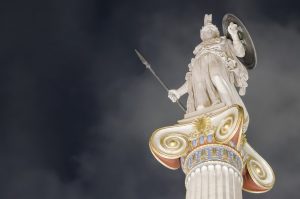
When you think of Athena, think intelligence. But much more than book smarts, Athena was the goddess of strategic warfare. Where Ares thrived in chaotic, bloodthirsty battle, Athena’s strength lay in calculated, clever conflict, not brute strength. Her wisdom guided mortals and gods alike, whether they were waging war or building cities. Athena was the ultimate protector, not just of Athens, but of anyone who used their mind before their muscles. Her approach was cool, composed, and wise. If you ever needed a plan to succeed, she was the goddess to call.
Apollo – The sun god with many talents
Apollo, god of light, music, poetry, and prophecy. He wasn’t just the sun god, but also – he was a patron of the arts, a healer, and the god who could predict the future. Apollo’s lyre could soothe even the wildest hearts, and his foresight could guide mortals through their most difficult decisions. He was also one of the most morally complex (for lack of a better word) gods – he was not above being vengeful. His role wasn’t just about bringing light; it was about guiding and revealing what the future held, for better or worse.
Artemis – The fierce protector
Artemis, Apollo’s twin sister, was the goddess of the hunt, wild animals, and chastity. She wasn’t just a protector of nature; she was the embodiment of independence. Artemis wasn’t interested in marriage or family life – she had other, for her far more important things on her mind. She roamed the forests, bow in hand, fiercely guarding her space. She protected women and children but had no patience for those who intruded on her world with malice. If you crossed Artemis, you were in for a world of hurt.
Ares – The god of war’s darkest side
Ares was not the god of strategy, far from it: he was the god of the bloodlust and chaos that came with war. Where Athena saw war as something to be carefully managed, Ares reveled in its brutality. He loved the carnage, the noise, the violence, the clashing of shields and swords. And the gods knew it. Ares wasn’t admired in Greek culture—he was feared, often seen as reckless and destructive. He embodied the ugly side of war, the part that left nothing but suffering in its wake. Yet, ironically, he was revered in battlefields, where his presence marked the clash of swords and shields.
Aphrodite – The irresistible force
Aphrodite, born from the sea foam, was the goddess of beauty, love, and also desire. If you are thinking she was just a pretty face, nothing could be further from the truth. Aphrodite’s power was irresistible. Mortals, gods, and heroes alike fell under her spell. Her love could be beautiful, but it could also be very destructive. Aphrodite’s relationships, like her famous affair with Ares, caused all sorts of problems. But her influence wasn’t all about romantic love – it was about the force of desire itself, a pull of attraction so strong that it could change the course of history itself. The Trojan War? All because of Aphrodite’s promise to Paris.
Hephaestus – The creator’s hands
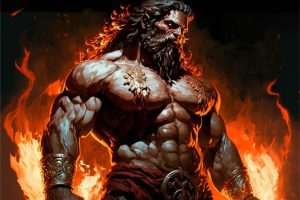
Hephaestus was different to other gods. He wasn’t a god of power or passion – he was a god of creation. The divine blacksmith, he crafted the weapons of the gods, good and bad. Weapons like the shield of Achilles. He made armor and tools that were as legendary as the gods who wielded them. Hephaestus wasn’t known for his looks – he was physically flawed – but his skills were unmatched. In a world of gods ruled by emotions and ambitions, Hephaestus was the craftsman. He was methodical, precise, and could create anything out of the raw materials of the world.
Hermes – The messenger with a twist
Hermes was more than just a messenger to gods and men alike. Sure, he carried messages between gods, but he also protected travellers, merchants, and thieves. A trickster by nature, Hermes was quick-witted, clever, and often played both sides of a situation. He could outsmart anyone – god or mortal – and his cunning made him one of the most unpredictable gods of them all. Hermes also guided souls to the underworld, bridging the world of the living and the dead with ease. He was a god who could slip between worlds with a smile and a wink.
Dionysus – The god who let loose
Dionysus, the god of wine, ecstasy, but also, and maybe not so far-fetched, madness, was the life of the party – and then some. Where most gods thrived on order, Dionysus thrived on chaos. His followers were wild, free, and uninhibited. And the more you gave into the madness, the more you felt Dionysus’s power. He wasn’t just a god of indulgence – he represented the blurred lines between pleasure and destruction. He was the god who showed that sometimes, surrendering to the moment was the only way to truly live.
The immortal legacy of Greek mythology
These figures aren’t just part of ancient history – they’re alive in our cultural imagination, influencing art, literature, and even the way we think about power, love, and morality to this day. The gods and heroes of Greek mythology might have lived in the minds of people a time long ago, but their stories continue to resonate with us today. Their human flaws, their epic triumphs, and their monumental failings are all a mirror to who we are – and who we strive to be – on a grander scale. The myths remind us of the fragility of life, the complexity of relationships, and the constant battle between destiny and free will. Greek mythology is more than just a collection of ancient tales to be dismissed. It’s an ongoing dialogue about what it means to be human.